Andy Burham has launched or at least speeded up Louise Casey’s look at social care. He said some good things and there’s been lots of things said about care and unpaid carers and the cost of paid care.
Here’s what’s bugging me. There is lots of stuff being said about the cost of care and the terrible situation people find themselves in paying for it. You don’t get any help until your assets are less than £23,500 and then you pay a contribution until you have something like £14,000. So people who own houses have to sell them to pay for care. The argument is that if you’ve worked hard all your life and bought a hose, then you should be able to leave that to who you choose. It is unfair that a 78 year old with a house and carer will get all there care paid for and a 78 year old with dementia will have to sell their house to afford care. The thing that has really bugged me this week is the way that we are dividing old people into the deserving old people and the undeserving who somehow get free care because they don’t have an asset.
Mum happens to fall into the no assets corner so let’s talk a little about how it actually works for us and what is or isn’t free.

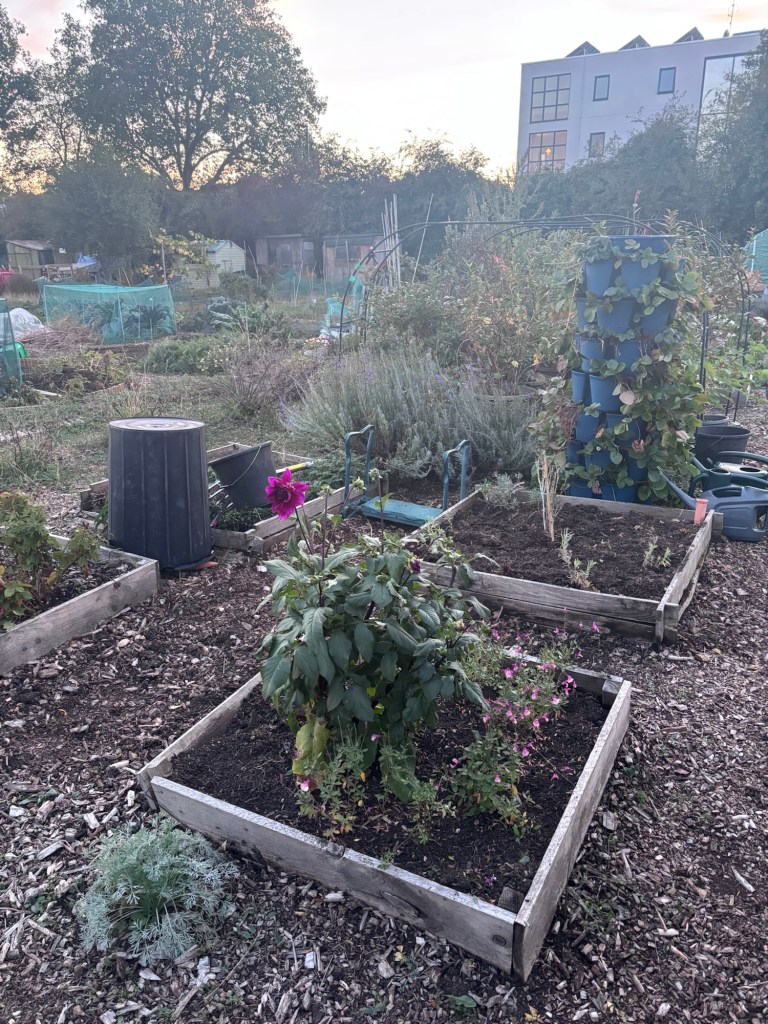
Let me recap. Mum has worked hard since she was 16, she wasn’t the only mother I knew that had a job but she was the only one that I knew of that had a full time office job. She paid a full National Insurance stamp and worked until she was 64. She has a decent pension state and private. When the private rent she was paying got raised again, she applied for a sheltered housing flat with the council and got one. The rent is nearly £900 but she has enough money via pensions to live comfortably. Up until COVID mum was really active, she volunteered at the food bank and Kingston Churches Action on Homelessness (KCAH), she was involved in Healthwatch and she helped at the allotment.
In 2024, she had a fall and in 2025 she was diagnosed with Progressive Supranuclear Palsy (PSP). We had to go private to get that diagnosis and used a credit card to do so.

PSP is a terminal progressive neurological disease. It’s caused by the build up of tau proteins, which is the same cause as Alzheimer‘s disease but in a different part of the brain. It’s often described as Parkinson’s on speed as it shares similar symptoms but the time from diagnosis to death is on average 4-6 years. Symptoms include frequent falls, difficulty moving, dementia, problems speaking and swallowing, difficulties with vision (although mum has avoided that one so far). There is no treatment and no cure.
When mum got the diagnosis, it coincided with her having a series of falls and not being able to get up. My sister in law called the council a s they sent in the rehab team, we had carers come in every day for two weeks and the OT and Physio. The OT was impressed by what we’d already done, we had a shower chair, a toilet support and a Swedish trolley already. She ordered a bed lever and a wheelchair. Her other recommendations were that we get mum rehoused to a ground floor flat, and ask for 2 bedrooms as eventually mum would need overnight care. We did that application and had another OT visit to back up that application.

Mum is on the housing but at lowest priority, the reason for that decision it that re housing her “won’t affect the progress of her disease”. Her housing association have given her priority within her block of flats for a one bedroom ground floor flat. They won’t consider an extra room for overnight carers (I currently sleep on the floor)

Right now, I do all housework, shopping, cooking, and everything else. I have a full time job and I know how fortunate I am that work are so accommodating and Mum and I would both prefer to live together and I would give up my flat and move in if she had a two bedroom but we can’t get that and we can’t afford to privately rent a two bedroom.
I understand the decisions but they don’t help mum and they don’t help me care for her. Mum doesn’t currently meet the standards for getting carer via the council (they would be means tested but we could use her attendance allowance for that but it wouldn’t cover private carers and honestly at the minute they would do less than me and it wouldn’t help me because on the three days I’m not there she can get up and dress herself although that’s getting harder for her. I spend Monday to Thursday (Thursdays I usually go into the office) with her and go back on Saturday to set her up for the week. My brother often visits on Sunday mornings. I don’t get carers allowance because I earn too much to qualify for it, work have been fantastic about allowing me to be flexible but the only other thing I get is two weeks unpaid leave (which I can’t afford to take).
Mum can’t walk far and can’t get down the stairs without support and goes straight into a wheelchair. At some point she won’t be able to do it at all and then how do I get her to hospital appointments?

Then we’ll get to the stage where she needs care 24/7, there will be no room for a carer to stay, she’ll have to go into a home. It’s unlikely she’ll qaulify for continuing healthcare via the NHS, if the council decide that she meets the criteria for a home, then they will take all of her pension and attendance allowance (minus £30 a week) to go towards it. I’m fine with that, it’s roughly £550 a week and care home fees are massive. The inheritance I receive from my Mum will not be money, it’ll be her books, it’ll be my knowledge of the Peninsula Wars, my love of gin, my knowledge of hymns. At the risk of sounding soppy, it’ll be the love she gave me. I have PoA for mum, so if she’s in a care home, while my day to day care of her will stop, my care won’t. I’ll visit, I’ll wash her if she needs washing, I’ll use that £30 a week, and more besides probably, to buy her toiletries and clothes. However, this is not free care, and I’m trying to work out why my taxes should be used to subsidise someone else’s inheritance?
The worst thing is that I’m one of the lucky unpaid carers. Mum’s disease is terminal and for a neurological/dementia disease, it’s pretty rapid. This will end. I have understanding employers, I don’t have children or a partner that need me, mum is actually really easy to care for, understands and is clear about what is happening and we like each other, which makes this situation easier.

It’s harder for others, it’s harder for parents of disabled children. Right now unpaid carers are under tremendous strain, they are generally poorer, more stressed and older. According to the Census 4.8 million people are carers and 1.2 million of them live in poverty, with 400,000 in deep poverty.
I thought this before Mum got sick, and I still think it. I’m still not sure why, yet again, the poorest people, who have no assets and will have no inheritance should subsidise the richest so they can be left houses (and you can argue that houses are worked for but so is rent. I work, I can’t afford to buy 25% of a one bedroom flat in Ealing, you need to earn £58,000. (I feel I should remind you that 40% higher tax rate kicks in at £50,271) my taxes should be used to pay for benefit, for care, for the NHS, but I don’t see why they should be used to help people built generational wealth (thats what leaving people houses is) while leaving the poorest, poor.
What we could start with is joining all the services up, understanding that if you treat mum and I as a unit, it saves money, but until then social care is going to get worse.