
Last year was a good berry year at the plot.
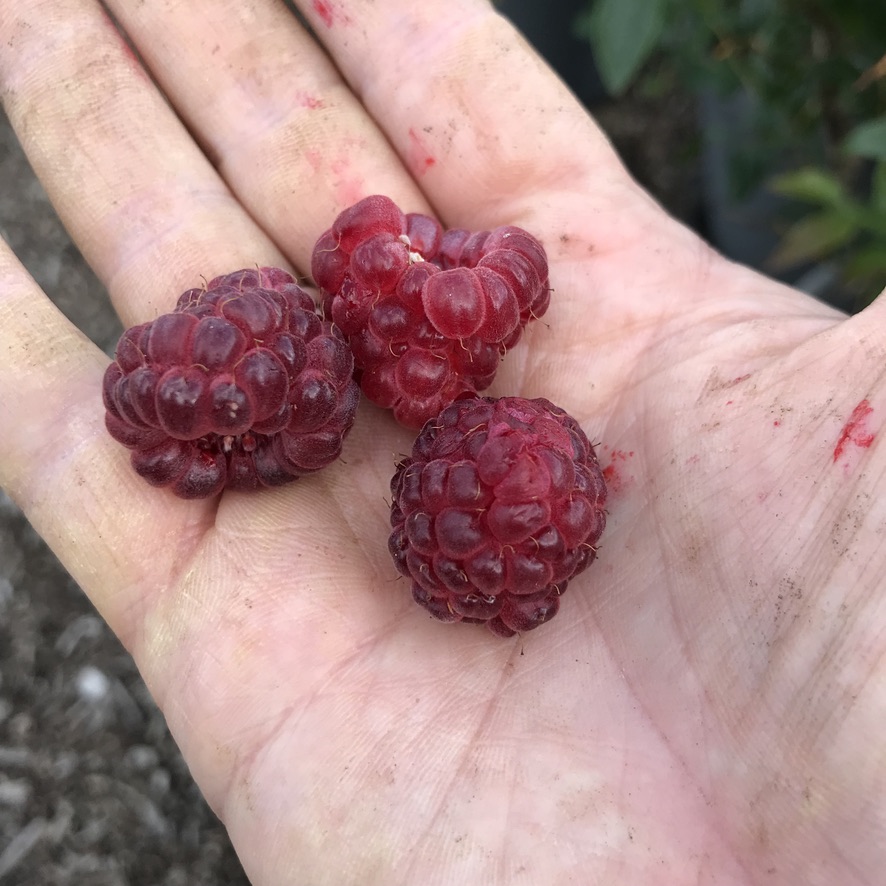
We got gooseberries, blueberries and blackcurrants, lots of them. I knew that this year was going to be a jam making year. Last year, I only made blackcurrant and tomato jam and while the tomato is great with cheese, it’s not amazing on toast and we ran out of jam pretty quickly. Practically, the last thing I did before I left the flat before building work last year was to make marmalade. There is one jar left!
So my was to make several small batches so that we had lots of different flavours. which I did we’ve had apricot, blackcurrant, gooseberry, raspberry and blueberry. I’ve just finished this weekend with two batches, a mixed berry made up mostly of raspberries and blackberries from the plot and a mixed berry from frozen fruit. This because we seem to have run through it.
Part of that is that I now have reputation for jam making and I do give the marmalade away because it gets rave reviews. One of my colleagues children made me a Christmas decoration, to thank me for the marmalade. Two of my colleagues have admitted to hiding it from family members.
Most of the preserves I made last year were made with fruit from the allotment (mixed berry and marmalade being the exceptions). While I don’t have an apricot tree on my plot others do and Nolan had a really good apricot year so gave me a kilo. So at least the fruit component of them are very local – the sugar is mostly made from sugar beet.
Sugar is a tricky part of trying to be sustainable. Beet sugar is more ‘local’ in that we actually grow it in the UK and imports of sugar beet are generally from nearby countries (France, Holland, Slovakia etc) and it’s generally more sustainable that cane sugar, because it needs less land and water to grow and processing it into sugar uses less CO2 than processing cane sugar. It’s not without issues, sugar beet growing is chemically intensive and to prevent the spread of Yellow Virus from aphids, the seeds are coated with neonicotinoid insecticides. There is a ban on them for most part, but sugar beet is the one place where most of the EU (and the UK) make an exception, in 2020, no neonicotinoids were used and the UK lost 25% of the sugar beet crop. So you do what you can and hope that it’s enough. It falls on the wrong side of the line for some people and overall, my sugar buying decisions are a drop in the ocean, I think I use about 10kg of sugar a year for preserving, but I have thought about it!
I still believe that my has a smaller footprint than buying jam and I do know exactly what’s in it. I’ve linked the recipes below
- Blackcurrant (I tripled the recipe and did two batches!)
- Blueberry
- Gooseberry
- Apricot
- Raspberry
I think that’s probably enough but I still have a hankering for cherry and peach but that’s really for next season.
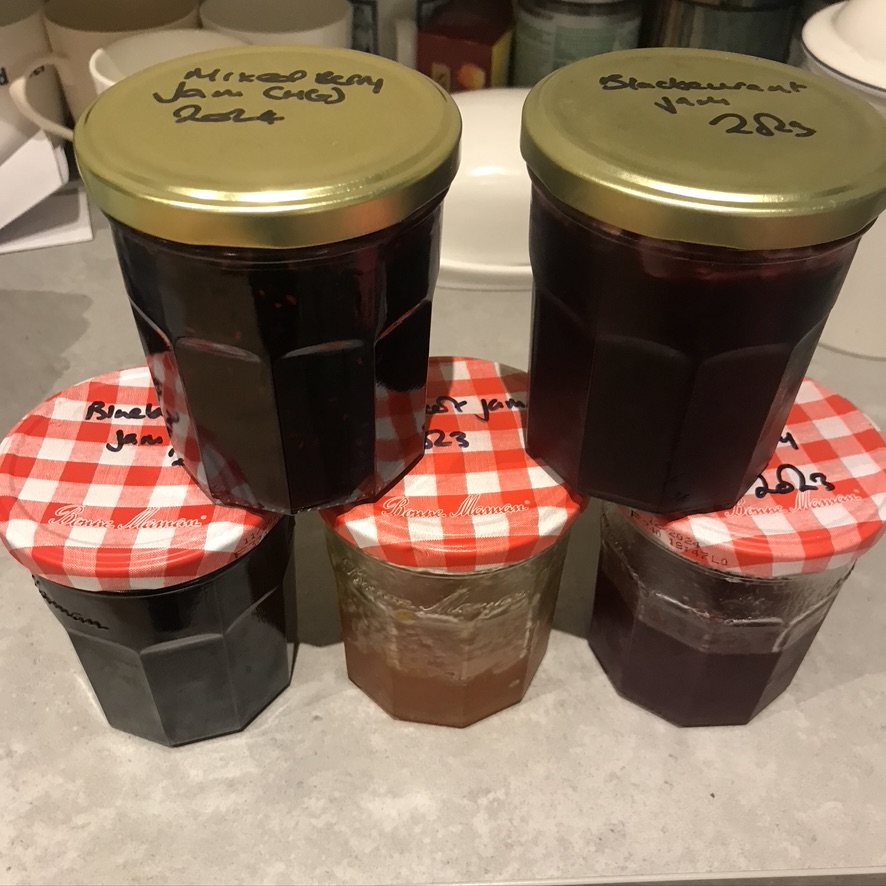
I’ve talked before about how I make jam and that I don’t water bath it, if you have feelings about it, I don’t really want to know, you do you, I’ve always done it like this and it’s always been fine. Once it’s opened, I keep it in the fridge. I’m sure that all the jam I make could also be water bathed for 20 minutes if you wanted to be extra careful but I’m not sure how that would work with the jars I use. I also don’t take this approach with recipes that do recommend water bathing, the tomato jam, apple butter and compote I make all get water bathed.
Which leads me neatly onto jars. I’ve used various jars over the years and this has lead to some confusion, like the time I gave someone chilli jam instead of marmalade. So I decided that I would use the Bonne Maman style jars for sweet jams and marmalade from now on. However, getting jars back is the bane of my existence so this year I’m going a batch of marmalade in jars I don’t care about and only giving the jars I want back to people I trust. Sally and Jane also give me their spares which is amazing.
Fingers crossed for a good berry year in 2024!

 Nic Dempsey